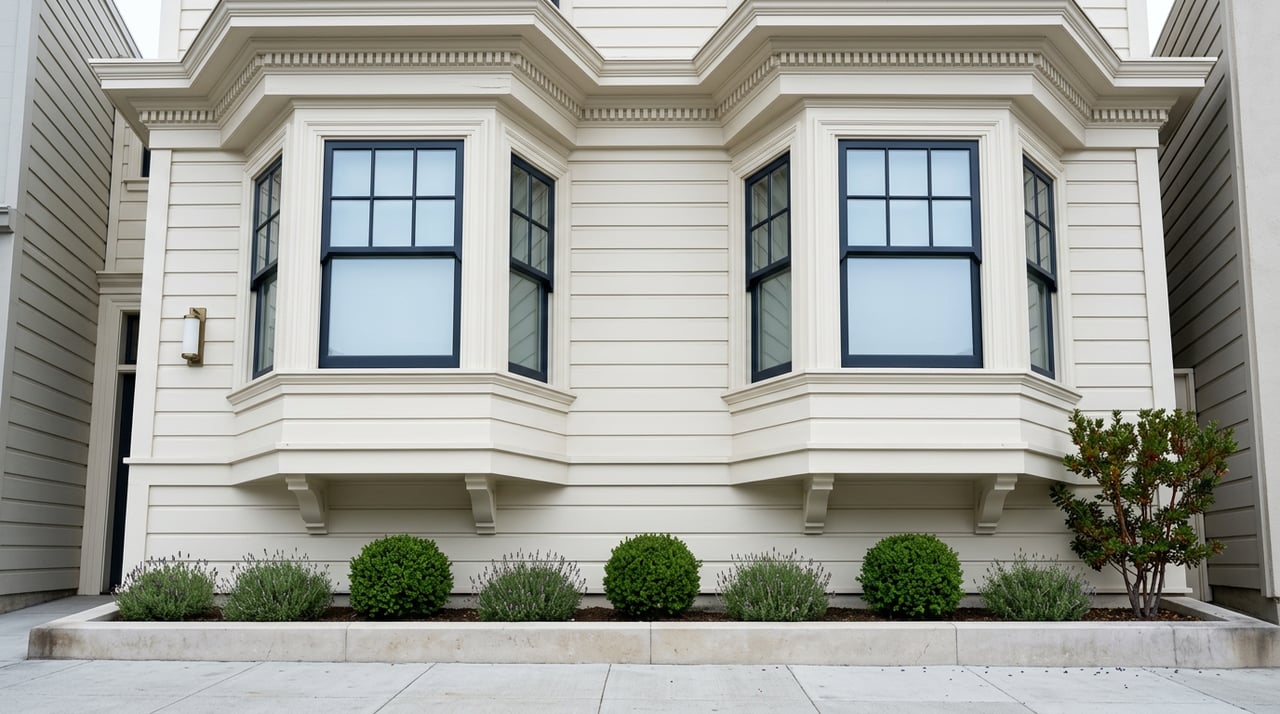
Upper Fillmore New Openings to Watch in 2026
July 16, 2026
July 16, 2026
Walk the three blocks of Fillmore between Pine and Clay on a Saturday morning and the street looks the way it always has. Awnings up at Chouquet's. A line moving fast at Jane. Dogs tied to the low iron rail outside Pizzeria Delfina. Underneath that continuity, though, the storefront mix is turning over faster than it has in a decade, and most of the churn traces back to a single buyer.
The story residents keep hearing in fragments, a permit here, a rendering there, a shuttered space suddenly under construction, is actually one story. A venture capitalist named Neil Mehta spent 2024 acquiring buildings along Upper Fillmore, and 2026 is the year his tenants start showing up. If you live here, that changes what the next twelve months of walking your own street will feel like.
Neil Mehta has been spearheading what he calls the Upper Fillmore Revitalization Project, purchasing multiple buildings along a three-block stretch of Fillmore Street in the last two years. His holdings include the corner at 2001 Fillmore and the Clay Theatre building down at 2261. His stated motivation is unusual for a venture investor. He has conceded that Upper Fillmore in Pacific Heights isn't exactly a retail stretch in need of fixing, and on a podcast last year described the effort as possibly a "terrible investment," saying he was putting a "reasonable amount of money" toward trying to fix his own street.
That framing matters because it explains the pace. A landlord underwriting to conventional returns waits for market rents and takes the tenant a broker delivers. A landlord treating the block as a civic project curates. The result on the ground is that spaces which sat dark for eighteen months are now being handed to hand-picked operators, and the announcements are landing in clusters rather than dribbling out.
Here is what has been publicly confirmed for Upper Fillmore and the immediate blocks around it, with the sources that broke each one.
| Address | Concept | Status |
|---|---|---|
| 2001 Fillmore | Monami, upscale Korean BBQ | Fall 2026 opening |
| 2261 Fillmore | Clay Theatre interior rebuild | Demolition permits awarded |
| 1552 Fillmore | Yoeechee takeout sushi | Open, selling out daily |
| Fillmore & Post | Super Duper Burger | Sign up, opening imminent |
| 2222 Bush | Bon Bon Dispensary | Reopening the former Liberty space |
| 1800 Fillmore | NoNo Baru absorbing Bubu happy hour | Now running |
| Fillmore & Eddy | Fillmore Heritage Center pop-ups | Temporary reopening through December |
The single biggest signal is the 2001 Fillmore corner. A Korean barbecue project from the chef behind Michelin-starred SSAL is heading to the former Noosh space on upper Fillmore in Fall 2026, a space that has sat closed for nearly two years. The operators are Junsoo and Hyunyoung Bae, the founders of SSAL on upper Polk, branching out to open their second restaurant.
What the Baes are describing is not a second SSAL. Chef-owner Junsoo Bae told the Chronicle he wants it to be a Korean barbecue version of House of Prime Rib. If you know House of Prime Rib, that sentence tells you the room. Big banquettes, tableside theater, a set-piece meal rather than a small-plate crawl. That is a very different draw than Noosh was, and it is a different draw than SPQR or State Bird Provisions two blocks north. A destination Korean steakhouse changes the reservation math for the whole street on Friday nights.
The Bae statement announcing Monami thanked Mayor Daniel Lurie, District 2 Supervisor Stephen Sherrill, and the Upper Fillmore Revitalization Project, which is a rare civic co-sign for a single restaurant lease and further evidence that Mehta's operation is functioning more like a curated program than a landlord's leasing desk.
The Clay is the one that will define whether this reshuffle reads as reinvestment or displacement to the people who have lived through several Fillmore cycles. There is progress at the Clay Theater, where the city has awarded demolition permits to remake the interior of the historic single-screen theater at 2261 Fillmore, which has been dark since 2020. Mehta has suggested he wants to reopen it as a high-end arthouse cinema and lounge, modeled after New York's Metrograph.
A Metrograph analog on Fillmore is a big claim. The New York original is a two-screen repertory house with a restaurant and a members' program, and it functions as a neighborhood cultural anchor rather than a movie business. If the Clay lands anywhere near that, the block gets a night-time anchor it has not had since the theater went dark. If it stalls in permitting or opens as something less ambitious, the storefront closures upstairs of 2001 Fillmore start to read differently.
That upstairs point deserves its own note. The 2001 Fillmore building houses working offices above the ground-floor restaurant space. According to a letter from JJD Property Management, aside from considerable noise, works will also be required on the second floor and roof, including the replacement of the roof in its entirety. The tenants there are the kind of small operators, an aesthetician, a milliner, a marketing consultant and an online trader, who make a neighborhood feel like a neighborhood rather than a lifestyle district. Watching whether they return post-construction is the closest thing residents will get to a real-time indicator of how the revitalization plays out.
The revitalization project is not the whole story on the block. Some of the more useful additions this year are unrelated.
At 1552 Fillmore, just south of Geary, takeout sushi is back on Fillmore, and Yoeechee has moved into the streamlined space with a refreshingly simple concept: beautiful sushi boxes, made fresh each morning, priced for a real lunch and not a special occasion. The boxes have been selling out every single day. Executive chef Jihwan Wang and founder Tony Chong are pitching this as an everyday lunch rather than an occasion, which is what the stretch south of Geary has been missing.
The Super Duper Burger coming to the former Burger King space at Fillmore and Post is getting close, with the sign up and a contractor on site suggesting they could open within the month. At 2222 Bush, the cannabis shop is coming back as Bon Bon Dispensary, with Liberty expected to reopen under the new name after the storefront sat on the market for several years.
The California Street happy hour crowd should note the swap: Bubu on California Street went dark to make way for Don Don, restaurateur Kevin Chen's new izakaya concept, and Bubu has teamed up with NoNo Baru, Chen's other local restaurant at 1800 Fillmore, where the beloved happy hour is now running twice daily, 4:30 to 6 p.m. and 8 to 9:30 p.m. Two windows a night is a real change in how the sidewalk in front of 1800 Fillmore is going to feel between now and Labor Day.
Further south, the long-dormant Fillmore Heritage Center is getting a trial run. The city plans to reopen the former Yoshi's site temporarily through December for events, performances, pop-ups and community gatherings, made available free of charge to community groups, artists and small businesses, with applications expected to open at the end of June, while officials study what permanent reactivation of the 50,000-square-foot complex would require. The temporary program is exactly the kind of low-stakes experiment that can tell the city whether an entertainment-and-dining reactivation at that scale is realistic in the current climate.
For all the turnover, the spine of the street is intact. Florio still opens for its Wilmot Alley regulars. Pizzeria Delfina, Jane, Chouquet's, SPQR, State Bird Provisions, The Progress, and Dosa are all still where you left them. From the 2193 Fillmore block, Pizzeria Delfina, Jane, Salt & Straw and Blue Bottle sit along the block, with Copra, State Bird Provisions and Octavia ten minutes on foot, and premium retail from Rag & Bone, Lululemon, Ralph Lauren and Paige on the same stretch. The anchors that made people want to live here are not the ones being replaced.
The useful frame is this. Upper Fillmore is not organically evolving. A private revitalization program with civic buy-in is compressing what would normally be five years of retail turnover into a single opening season, alongside a handful of unrelated arrivals that happen to be landing at the same time. By late fall, the block between Pine and Clay will read differently. If Monami hits and the Clay reopens on the Metrograph model, the street gets a second act. If either stalls, the empty upstairs offices at 2001 Fillmore become the more important story.
Either way, this is a good year to pay attention to your own street.
If you are weighing what these shifts mean for a home you own on or near Fillmore, or for one you are thinking about buying into the neighborhood, Steve Giannone is available to talk through the block-by-block read. Schedule a strategy call.
Stay up to date on the latest real estate trends.
Get expert guidance tailored to your goals—whether you're buying, selling, or investing. Let's map out your next move with clarity and confidence.