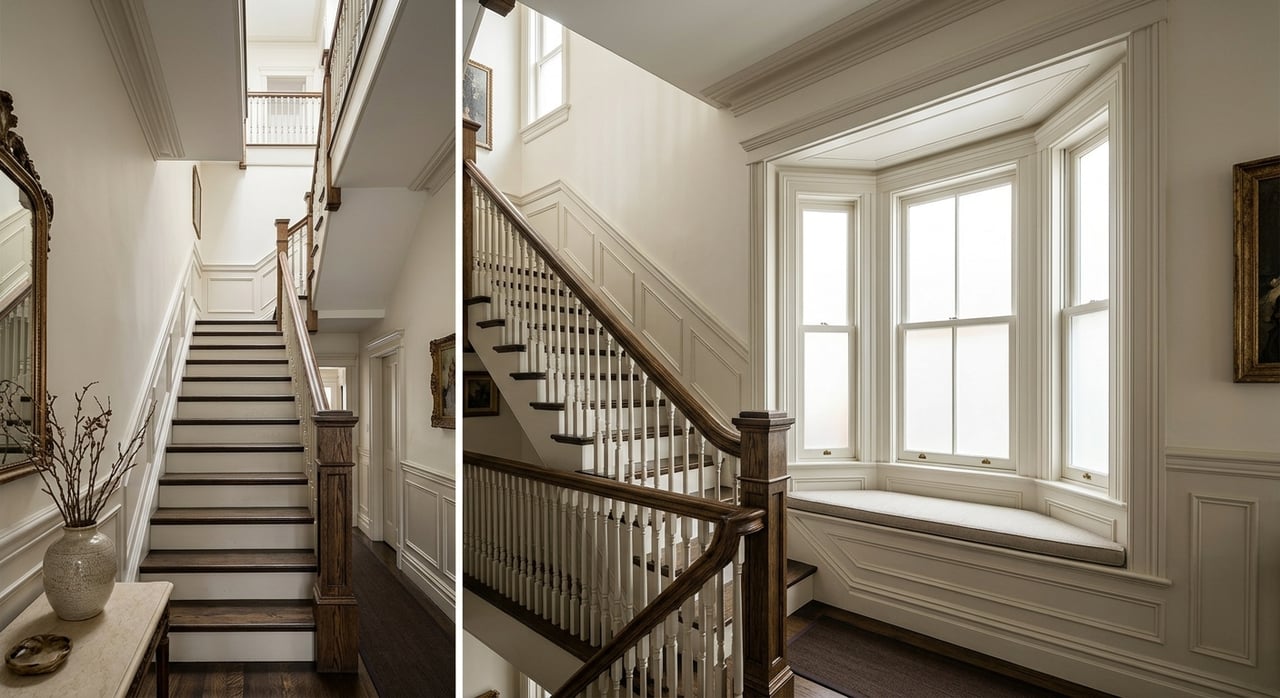
Presidio Heights Guide for Move-Up Buyers
May 21, 2026
May 21, 2026
If you are thinking about moving up in San Francisco, Presidio Heights can feel like both a dream and a puzzle. The neighborhood offers a rare mix of grand homes, smaller luxury residences, park access, and a quiet residential feel, but it also sits in one of the city’s tightest and most competitive housing segments. If you want more space, a stronger long-term fit, or a lifestyle upgrade, this guide will help you understand what to expect and how to prepare. Let’s dive in.
For many move-up buyers, Presidio Heights is not just about buying a larger home. It is about buying into a different daily experience, one that blends city living with immediate access to open space and a strong sense of place.
One of the biggest draws is the neighborhood’s location next to the Presidio. The Presidio of San Francisco is a National Historic Landmark District spanning 1,491 acres, with forests, beaches, bluffs, trails, and hundreds of historic buildings and structures. That kind of access can be hard to match anywhere else in the city.
You also get strong day-to-day mobility. Redfin reports a 92 Walk Score, 68 Transit Score, and 76 Bike Score for Presidio Heights, which supports a lifestyle where errands, recreation, and getting around the city can feel more convenient without giving up a residential setting.
Nearby amenities also shape the appeal. SF.gov highlights destinations like Presidio Tunnel Tops, Crissy Field East Beach, nature walks, history-focused outings, and Golden Gate Bridge views, all of which reinforce why many buyers see this area as a meaningful step up in lifestyle, not just square footage.
Presidio Heights is a small, luxury-heavy market, so headline numbers can vary depending on the data source. The bigger point is consistent: this is a high-price, low-inventory neighborhood where desirable homes can move fast.
Redfin’s March 2026 data describes Presidio Heights as most competitive. It reports a median sale price of $7,559,500, median days on market of 16, a 101.8% sale-to-list ratio, and 53.8% of homes selling above list price. Redfin also notes that multiple offers are common and waived contingencies are common.
Realtor.com’s March 2026 neighborhood data shows a median listing price of $2,997,500, only 5 homes for sale, and a 96% sale-to-list ratio. Zillow’s Home Value Index for Presidio Heights was $4,510,960 on April 30, 2026, up 18.0% year over year.
Those numbers do not line up perfectly, but that is not unusual in a small submarket with a wide spread of luxury inventory. A handful of larger estate-level sales can move the medians quickly. For you as a buyer, the practical takeaway is simple: inventory is limited, pricing is elevated, and you need to be ready to act when the right home appears.
Move-up buyers often assume Presidio Heights only offers large estate homes, but the neighborhood has a broader range than that. Recent Redfin sales suggest there are both smaller high-end residences and much larger single-family homes.
Examples on Redfin’s neighborhood page range from a 3-bedroom, 2.5-bath, 1,478-square-foot home that sold for $2.475 million to larger homes in roughly the $4.565 million to $8.2 million range. One 8-bedroom, 7,805-square-foot property sold for $7.85 million.
That range matters because your move-up goal may not be the same as someone else’s. You may want one or two extra bedrooms, more entertaining space, a better layout for working from home, or easier access to the Presidio rather than the largest house available.
In a market this competitive, waiting until you find the perfect home to start planning can put you behind. If homes are moving in a little over two weeks on average and many receive multiple offers, your prep work needs to happen early.
That means understanding your budget before you tour seriously, reviewing how much equity you can access from your current home, and deciding how flexible you can be on timing. It also means being realistic about the trade-offs between price, condition, size, and exact location within the neighborhood.
For move-up buyers, this is where strong financial planning becomes a real advantage. In a fast-moving luxury market, confidence comes from knowing not just what you want, but what you can execute cleanly.
This is one of the biggest questions for move-up buyers in Presidio Heights. In many cases, the default path is to sell first, then buy.
The CFPB says that if you want to move, you normally try to sell your home before buying another one. That approach can reduce risk because it gives you clearer numbers for your available equity and lowers the chance that you carry two homes at once longer than expected.
Still, selling first is not the only option. If you need to buy before your current home sells, a bridge or swing loan may help, but only if underwriting supports it. Fannie Mae says the lender must document your ability to carry the new home, your current home, the bridge loan, and your other obligations.
A rent-back can also help with timing after you sell. Fannie Mae recognizes rent-back credit as part of a sale structure, but it cannot be counted as eligible funds for your closing costs, down payment, or reserves. In plain terms, it can create breathing room for your move, but it does not increase your purchasing power.
Your best path depends on three things: liquidity, risk tolerance, and how specific your next-home criteria are. If you need your current home’s equity to close, selling first may be the cleaner route.
If you have substantial liquidity and a lender confirms you can qualify while carrying overlapping obligations, buying first may let you compete more aggressively when the right property becomes available. That can matter in Presidio Heights, where low inventory can limit second chances.
If your ideal outcome sits somewhere in the middle, a sale with a rent-back may help reduce stress. The key is to map this out before you make offers, not while you are negotiating one.
Move-up buyers sometimes focus so much on the home search that financing becomes reactive. In Presidio Heights, that can be costly.
The CFPB says lenders evaluate your income, assets, employment status, savings, debt payments, and credit report or score when deciding whether to make a loan. If your plan involves selling, using equity, or buying before your sale closes, your lender should understand that structure from the start.
The CFPB also notes that the Closing Disclosure must be delivered at least three business days before closing. That is one more reason to keep your financing team updated early if your sale timing, available funds, or transaction structure changes.
It is easy to focus on the down payment and purchase price, but your full move-up budget should be broader. A more expensive home usually brings higher transaction costs and higher recurring costs.
The CFPB says typical mortgage closing costs are 2% to 5% of the purchase price, separate from the down payment. It also notes that buyers who put less than 20% down typically pay mortgage insurance.
Ongoing costs matter too. The CFPB highlights property taxes, insurance, HOA dues if applicable, repairs, and home improvements as part of the true cost of homeownership. When you move up, these line items can increase meaningfully, even if the home feels like a clear lifestyle upgrade.
In San Francisco, property tax planning should be part of your decision early. According to the San Francisco Assessor-Recorder, property taxes are based on the property’s net assessed value multiplied by the yearly tax rate, with a 1% base tax plus voter-approved bond indebtedness and direct assessments.
The city also notes that reassessment generally happens when a property changes hands or new construction is added. Annual assessed-value increases are generally limited to inflation or 2%, whichever is lower, under Proposition 13 rules.
If you are selling your current home to fund your purchase, remember to model seller-side transfer tax too. San Francisco says the transfer tax is imposed when the deed or other instrument conveying title is recorded, and the rate varies based on purchase price or fair market value.
A smart Presidio Heights plan usually starts with clear numbers and a clear sequence. Before you write offers, make sure you can answer the following:
This kind of prep does not remove competition, but it helps you move decisively when a home fits.
For some move-up buyers, school planning is part of the search. If that applies to you, it is important to verify the current process rather than assume a home purchase guarantees a specific placement.
SFUSD says it uses attendance-area schools for many elementary students, but attendance-area placement is not guaranteed. SFUSD also says families can apply to any of the city’s elementary schools. If schools are a factor in your move, it is wise to check the assignment process early in your planning.
For many buyers, the answer comes down to how you value lifestyle, location, and long-term fit. Presidio Heights offers a rare blend of prestige, limited inventory, direct access to one of San Francisco’s most remarkable open-space assets, and strong walkability in a residential setting.
It is also a market where the financial stretch needs to be grounded in real numbers. A smart move-up purchase here is not just about reaching for more. It is about making sure the home, the carrying costs, and the timing all support the life you want to build next.
If you want help evaluating your options, pressure-testing your budget, or building a move-up plan for Presidio Heights, connect with Steve Giannone for a strategy conversation.
Stay up to date on the latest real estate trends.



Get expert guidance tailored to your goals—whether you're buying, selling, or investing. Let's map out your next move with clarity and confidence.